
The restoration of links between fragmented wildlife habitats is a vital step in addressing biodiversity loss improving the resilience of species to the impacts of climate change.
Mae adfer cysylltiadau rhwng cynefinoedd gwyllt wedi rhannu yn gam hanfodol wrth fynd i’r afael â cholli amrywiaeth bywyd a gwella gwytnwch y rhywogaethau i effeithiau newid hinsawdd.
Enabling wildlife to migrate unhindered from one area of river to another is critical to many stages of their life cycles including. For example, Atlantic salmon, need to be able to swim up rivers as adults in order to spawn and deposit their eggs in the cool headwater streams each autumn whilst the daily feeding habitats of otters can involve traveling long distances in a single night hunting for food. Man-made barriers across and along our rivers hinder this behaviour, stopping the migration or causing the animals to take alternative routes.
Mae galluogi bywogaethau gwyllt i fudo heb unrhyw rwystrau o un ardal afon i un arall yn hanfodol i lawer o gamau eu cylchoedd bywyd gan gynnwys. Er enghraifft, mae brithylloedd yr Iwerydd angen gallu nofio i fyny afonydd fel oedolion er mwyn lledaenu a gollwng eu hwyau yn nantau pen dŵr oer bob hydref tra gall bywydau bwydo dyddiol yr eirth ddŵr gynnwys teithio pellteroedd hir mewn noson sengl yn hela bwyd. Mae rhwystrau a wnaed gan ddyn ar draws ac ar hyd ein afonydd yn rhwystro’r ymddygiad hwn, gan atal y fudo neu achosi i’r anifeiliaid gymryd llwybrau eraill.
These barriers are often highly visible in the form of weirs. However, a more sinister, and unfortunately often overlooked hinderance to migration, are the numerous culverts through which our streams and rivers flow, passing out of sight, beneath our roads, railways and built-up areas. The culverts present a migration challenge under low summer flows when the water is often too shallow for fish or, present a raging torrent with no places for fish to rest during floods.
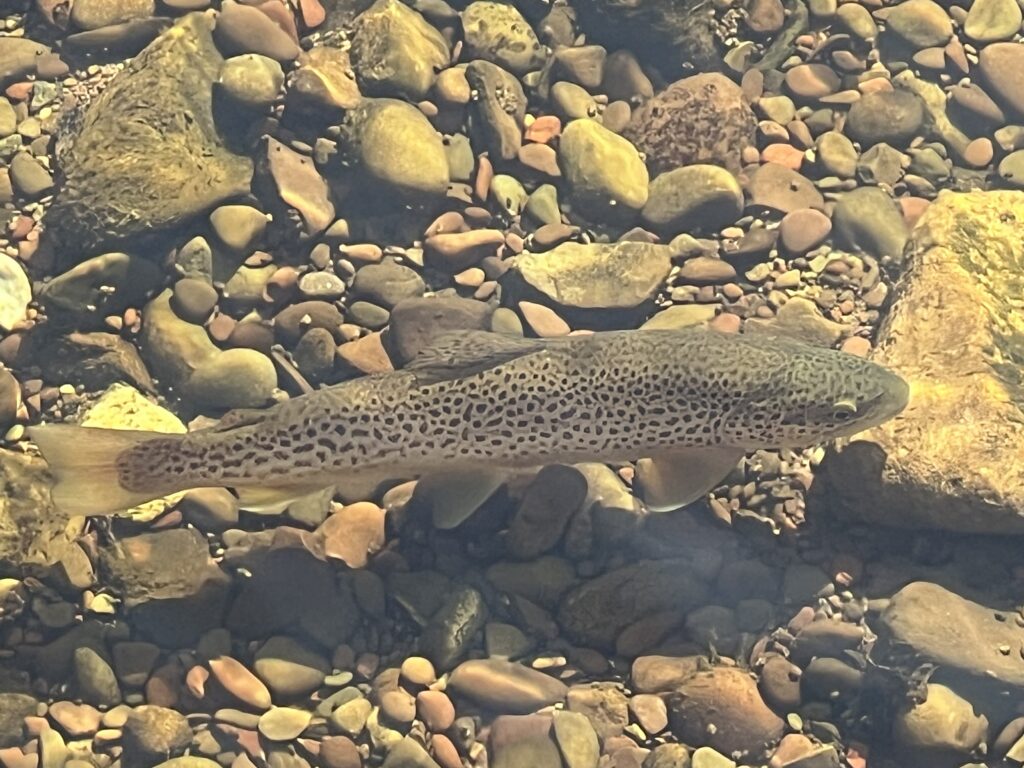
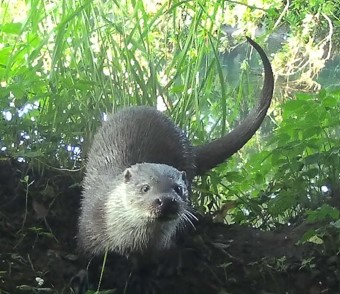
Mae’r rhwystrau hyn yn aml yn amlwg iawn yn ffurf gweiriau. Fodd bynnag, mae rhwystr mwy drwg, ac yn anffodus yn aml yn cael ei esgeuluso i fudo, yw’r nifer fawr o gylcheddau y mae ein nantau a’n afonydd yn llifo drŵnt, yn mynd allan o’r golwg, o dan ein heiddo, rheilffyrdd a mannau wedi’u hadeiladu. Mae’r cylcheddau yn cyflwyno her fudo yn ystod llifau isel yr haf pan fo’r dŵr yn aml yn rhy fyr i bysgod neu’n cyflwyno afon gwyllt heb unrhyw lefydd i bysgod orffwys yn ystod llifogydd.
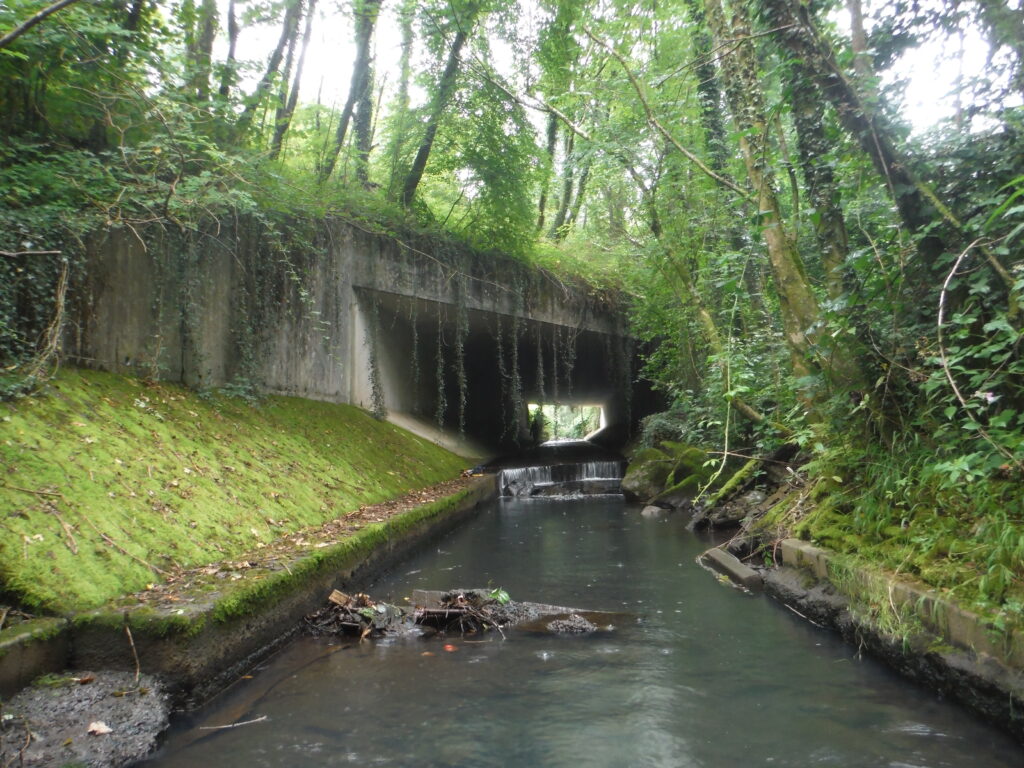
With funding support of the ‘Inland Fisheries Habitat Restoration Project’ from Welsh Government and Natural Resources Wales, the South East Wales Rivers Trust has started to address those culverts in its region, which it considers to be acting as barriers to fish migration. The Trust have recently completed one of their most ambitious projects on a culvert beneath the A4119 in the Ely valley above Llantrisant.
Gyda chefnogaeth ariannol gan y ‘Prosiect Adfer Cynefinoedd Pysgodfeydd Mewnol’ gan Lywodraeth Cymru a Chyfoeth Naturiol Cymru, mae Ymddiriedolaeth Afonau De Ddwyrain Cymru wedi dechrau mynd i’r afael â’r cloddion yn ei rhanbarth, y mae’n eu hystyried yn gweithredu fel rhwystrau i fudo pysgod. Yn ddiweddar, mae’r Ymddiriedolaeth wedi cwblhau un o’u prosiectau mwyaf uchelgeisiol ar gloddyn dan yr A4119 yn dyffryn Elái uwchben Llantrisant.
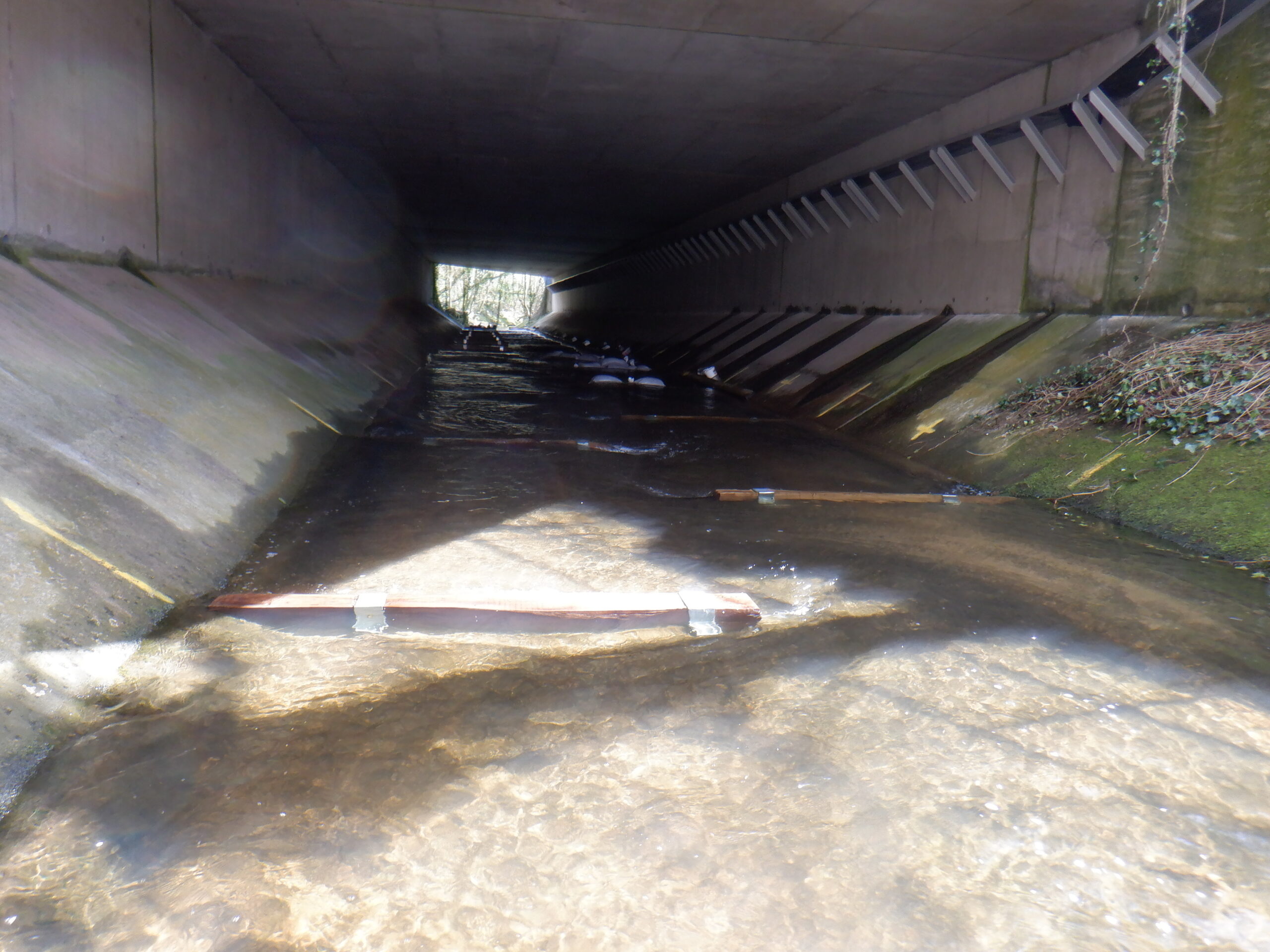
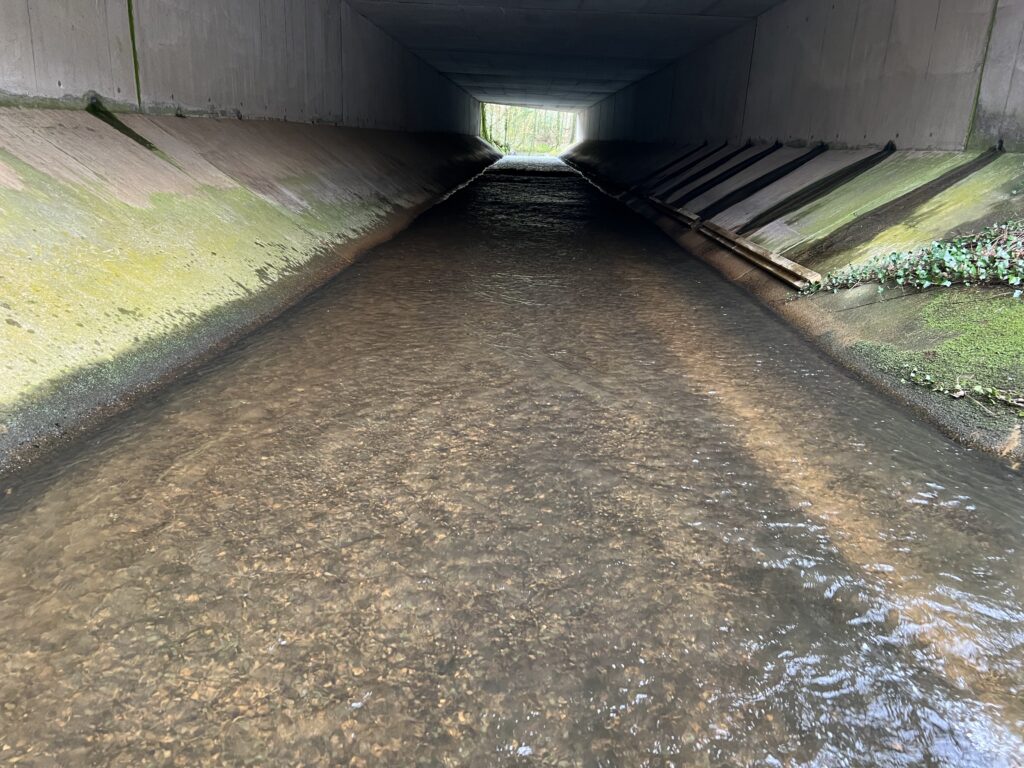
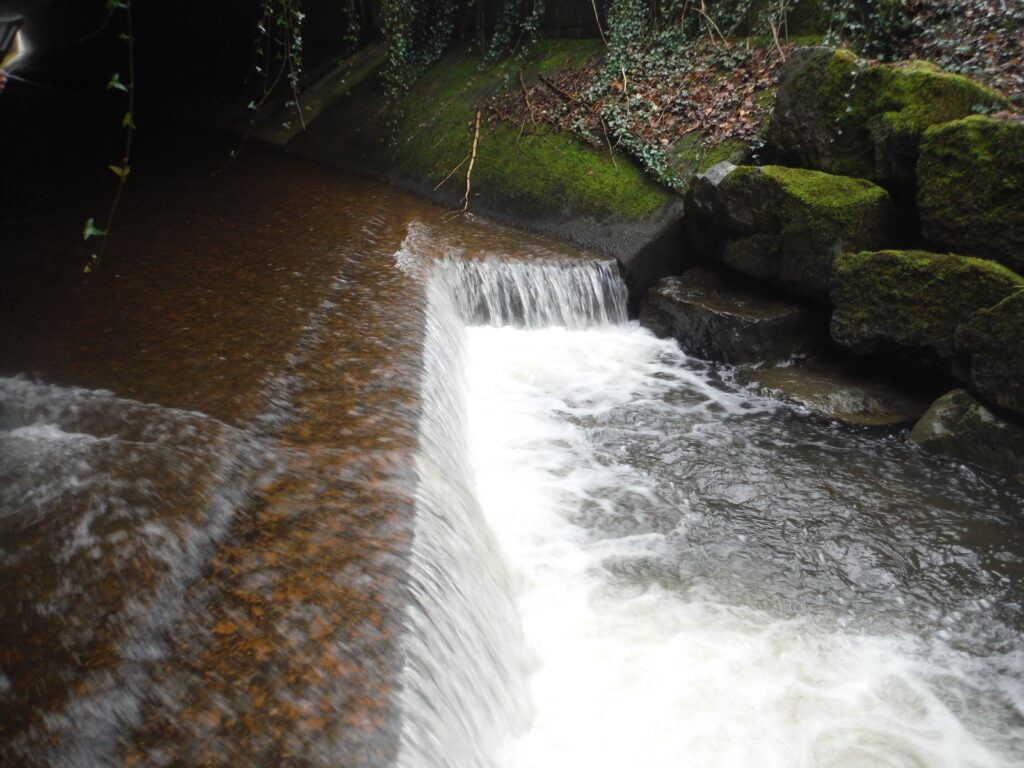
The 80-meter-long culvert has presented a significant barrier to the migration of salmon, brown trout, sea trout, bullheads, stoneloach, eels and lamprey since its construction in the mid-1980s. The Trust have inserted 28 oak baffles increasing the depth of water during dry weather and slowing down the speed of the water in the culvert so that fish can swim upstream. In addition, a floating fish-ramp (only the second installed in the country) has been incorporated to enable fish to climb over the downstream concrete lip of the culvert. These improvements will enable adult fish to move upstream to the spawning areas of the upper Ely but will also aide the young fish migrating downstream as they head towards the sea and their migration to the Arctic.
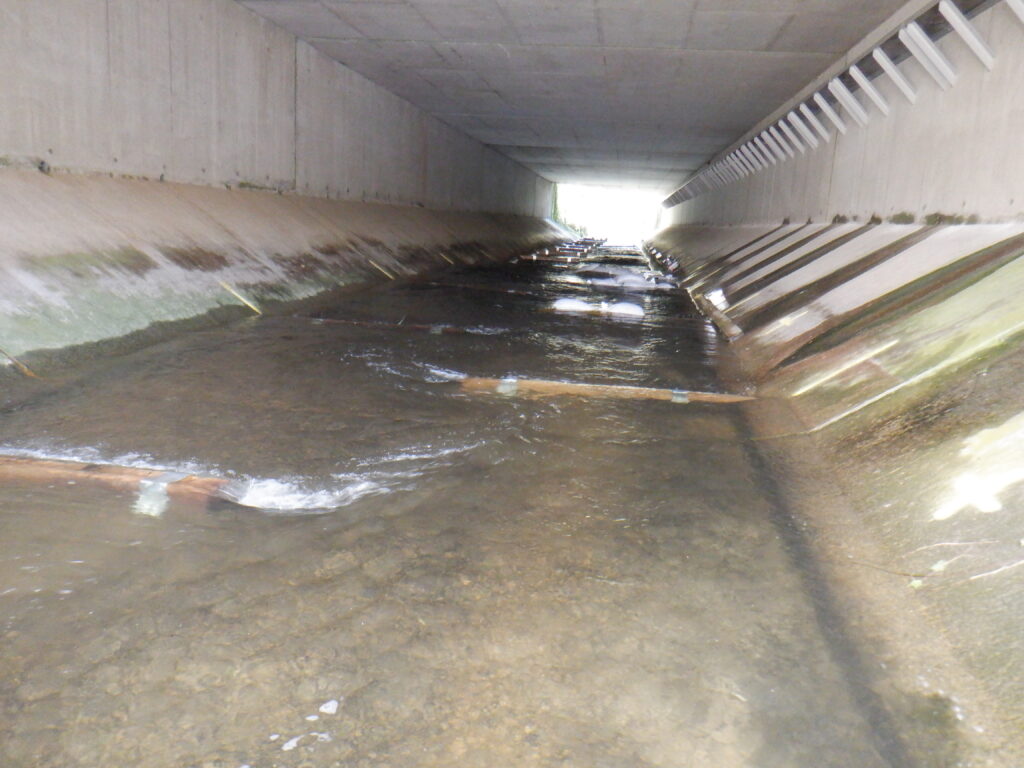
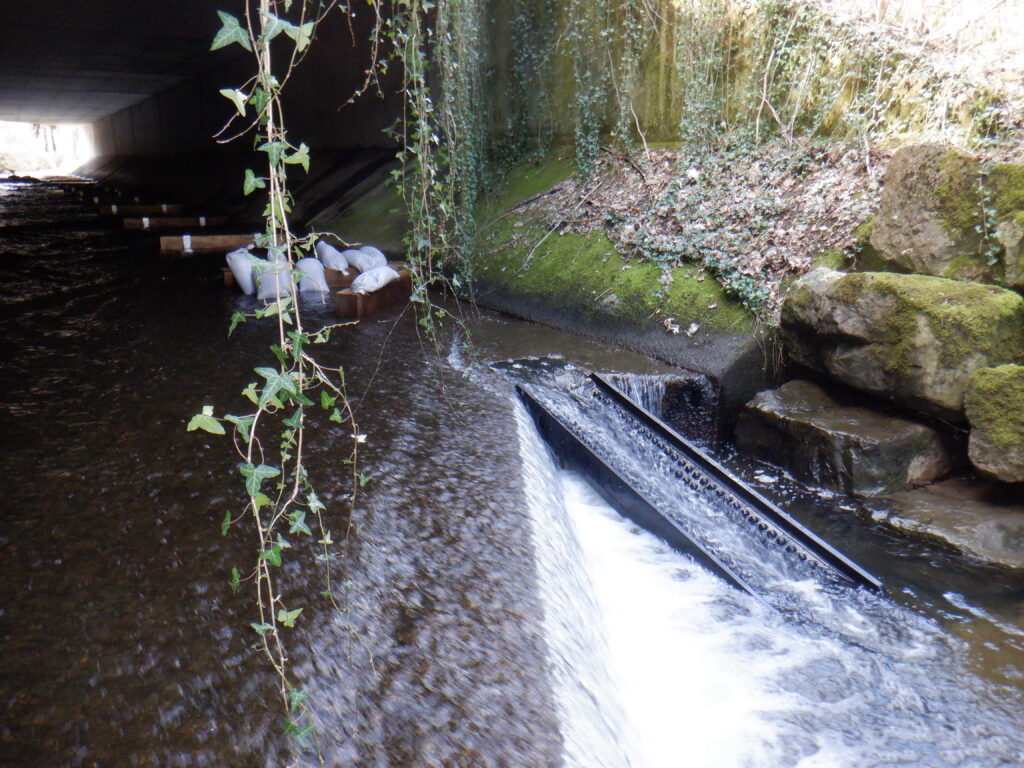
Mae’r tiwb croesffordd 80-metr o hyd wedi cyflwyno rhwystr sylweddol i fudo brithyllod, trwyth brown, trwyth môr, penysgub, bachil, elyrch a lampred ers ei adeiladu yng nghanol y 1980au. Mae’r Ymddiriedolaeth wedi gosod 28 rhwystrau derw sy’n cynyddu dyfnder y dŵr yn ystod tywydd sych ac yn arafu cyflymder y dŵr yn y tiwb croesffordd fel y gall pysgod nofio i fyny’r afon. Yn ogystal, mae ramp pysgod arwynebol (yr ail un yn unig i’w osod yn y wlad) wedi’i gynnwys i alluogi pysgod i ddringo dros y lip concrid i lawr yr afon o’r tiwb croesffordd. Bydd y gwelliannau hyn yn caniatáu i bysgod oedolion symud i fyny’r afon i ardaloedd nythu’r Ely uchaf ond hefyd yn cynorthwyo pysgod ifanc sy’n mudo i lawr yr afon wrth iddynt gyfeirio tuag at y môr a’u mudo i’r Arctig.
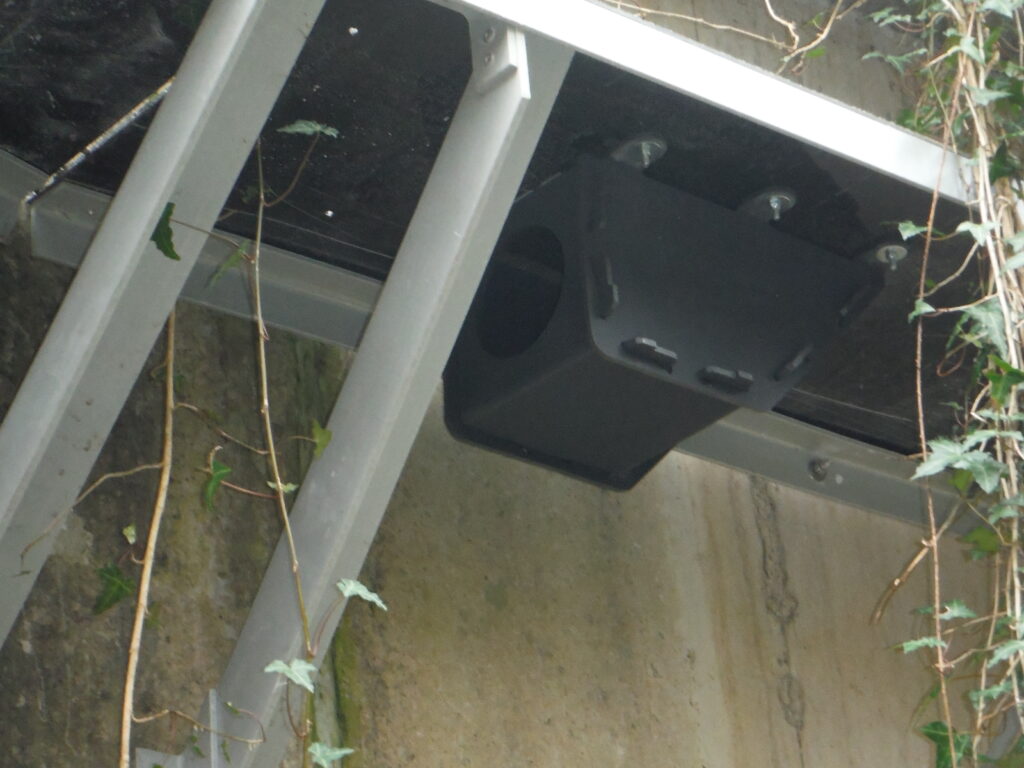
Not satisfied with just helping the fish species of the Ely, the Trust has obtained the financial support of the Local Nature Partnership in Rhondda Cynon Taff (Welsh Government Local Places for Nature grant), enabling the installation of an otter ledge throughout the length of the culvert. This is required because otters have an unfortunate habit of avoiding passing through culverts (if they have to swim through them). Preferring to travel along dry riverbanks where they can, they will often go up and over a culvert embankment with fatal consequences when crossing the busy roads above. Finally, bird nesting boxes have been installed in the culvert in the hope that dippers will take up residence where previously there was no opportunity for them to do so.
Heb fod yn fodlon ar helpu dim ond rhywogaethau pysgod yr Ely, mae’r Ymddiriedolaeth wedi cael cefnogaeth ariannol Partneriaeth Natur Leol yng Nghyngor Rhondda Cynon Taf (Grant Lleoliadau Natur Llywodraeth Cymru), gan alluogi gosod llwyfan otter ar hyd hyd y culvert. Mae hyn yn angenrheidiol oherwydd mae otters yn tueddu, yn anffodus, i osgoi hedfan trwy culverts (os oes rhaid iddynt nofio trwyddynt). Gan ffafrio teithio ar lanau afon sych lle y gallant, maent yn aml yn mynd i fyny ac yn dros raglen culvert gyda chanlyniadau trychinebus wrth groesi’r ffyrdd prysur uwchben. Yn olaf, mae blychau nythu adar wedi’u gosod yn y culvert gyda’r gobaith y bydd dipperiaid yn dod i fyw yn y man lle nad oedd cyfle ganddynt o’r blaen.
Our delivery partner was / Ein partner dosbarthu oedd: Land, Water and Environmental Projects.
Our key suppliers for the project were:
Otter ledges used in the project were supplied by Evergrip Limited.
Oak baffles were supplied by C&J Barrett, Cilfiegan Sawmill, Usk
Steel fixing brackets made by Powell and Bridges Welding, Ystrad Mynach
Flexi-baffles were provided by Corilla Plastics, Pontycymer.
The floating fish-ramp was imported from ATS Environmental, New Zealand.
Ein prif gyflenwyr ar gyfer y prosiect oedd:
Cyflenwyd platfformau Otter a ddefnyddiwyd yn y prosiect gan Evergrip Limited.
Cyflenwyd difrodion derw gan C&J Barrett, Sawmill Cilfiegan, Wysg.
Brakets gosod dur a wnaed gan Powell and Bridges Welding, Ystrad Mynach.
Cyflenwyd difrodion hyblyg gan Corilla Plastics, Pontycymer.
Mewnforiwyd y ramp pysgod nofio gan ATS Environmental, Seland Newydd.